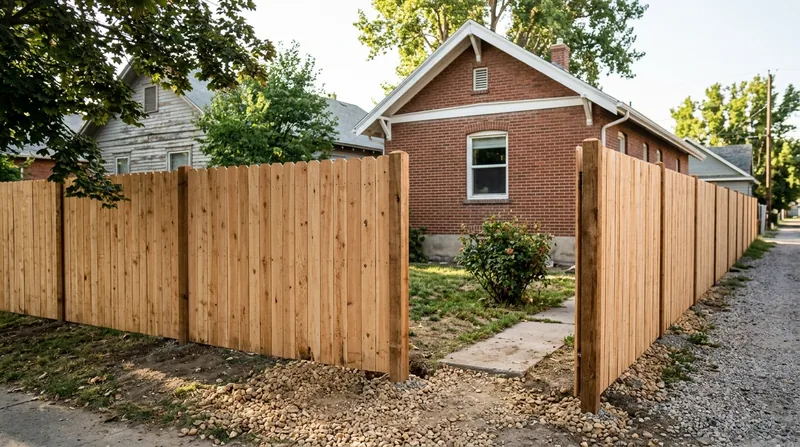




Salt Lake City's single-family lots present a distinct set of challenges for privacy fence installation. Many properties sit on compact, sloped terrain where gravel appears within a foot of the surface, and seasonal weather patterns demand posts set well below the frost line to prevent heave and settlement. A well-built wood privacy fence becomes more than a boundary marker; it's a wind break against down-canyon gusts and a snow load barrier for bench properties. We build fences that hold their line and their integrity for decades, using field-proven methods and materials suited to local conditions.
Why Wood Privacy Fencing Matters in Salt Lake City
Homeowners throughout Salt Lake City, West Jordan, and Sandy choose wood privacy fences for three reasons: sight lines, property definition, and durability when built right. A 6 foot privacy fence installed to code gives you control over what neighbors see and what the street sees of your yard. It also establishes clear boundary lines and adds measurable value to a property. However, the local terrain and exposure mean that corner-cutting on post depth, concrete set, or material choice fails fast.
- Set posts below the frost line to prevent heave and settlement that racks the fence frame.
- Use pressure-treated lumber or cedar for the posts, rails, and pickets to resist ground-line moisture.
- Space posts no more than 6 feet apart to handle wind load and snow weight.
- Install concrete footings at each post hole, tamped and set to full depth, not merely tamped soil.
- Choose board-on-board or side-by-side picket patterns for privacy and structural strength.
A fence built to these standards will serve you for 15 to 20 years or more, depending on maintenance and exposure.
Key info: Salt Lake City building codes and HOA rules vary by neighborhood. Check with the Salt Lake City building department or your HOA before ordering materials. Height limits, setback rules, and material restrictions are not uniform across the metro area.
For more on long-term fence care, see our fence staining and restoration service.
How We Install Wood Privacy Fences in Salt Lake City: From Survey to Finish
We follow a straightforward process that respects your property, your neighbors, and local code. Every job starts with a walk-through and a clear conversation about what you want and what the city or county allows. We then call 811 for a utility locate (required by law before digging), mark the fence line based on your existing survey or the boundary you identify, and set posts in concrete below the frost line. The build-out follows, with rails and pickets installed plumb and level, and cap or trim applied to protect the top of the fence from weather.
- Walk the property and identify the fence line with you and verify setbacks and height limits with local code.
- Call 811 for a utility locate at no cost; wait for marks before we dig any post holes.
- Dig holes below the frost line, set posts in concrete, and allow concrete to cure before framing.
- Install rails and pickets to your chosen pattern (board-on-board, side-by-side, or stepped for sloped terrain).
- Install cap and trim, sand any rough edges, and clean up all debris.
- Discuss staining or sealing options to extend the fence life and appearance.
The entire process typically takes 2 to 4 weeks from estimate to completion, depending on the linear footage and site access.
Local example: A 150-foot wood privacy fence on a South Jordan property with gravel 18 inches down required posts set 42 inches deep to clear the frost line. We dug, set concrete, and framed the fence in 5 working days. The homeowner chose a board-on-board pattern for maximum privacy and wind resistance.
If you have an existing fence that needs repair instead of replacement, our fence repair service can often save you money and time.
Installation Methods and Material Choices
| Approach | Description | Best for |
|---|---|---|
| Cedar Fence | Premium softwood with natural rot and insect resistance; lighter color and tighter grain than pine; requires staining or sealing every 2 to 3 years. | High-visibility properties, homeowners who plan regular maintenance and want a natural wood appearance. |
| Pressure-Treated Pine | Chemically treated softwood for ground-contact durability; lower cost than cedar; yellows or grays over time unless sealed; can be stained to any color. | Budget-conscious homeowners, properties where appearance is secondary, fences that will be stained or sealed. |
| Board-on-Board | Pickets overlap on both sides of the rails; blocks sight lines from all angles; higher material cost; superior wind and snow load handling. | Maximum privacy; exposed or windy sites; properties with down-canyon exposure or heavy seasonal snow. |
| Stepped or Racked Installation | Fence follows the natural slope of the land; stepped version uses level sections; racked version angles the pickets to the slope; stepped is more visible, racked is cleaner. | Sloped properties; Salt Lake City bench lots and hillside properties where level installation would leave gaps. |
Each method has trade-offs. Cedar costs more upfront but ages beautifully and requires less frequent sealing. Pressure-treated pine is budget-friendly and durable but needs regular staining to look its best. Board-on-board offers unbeatable privacy and strength but uses more material. Stepped or racked installation solves the slope problem but adds labor.
Wood and Privacy Fence Installation Cost in Salt Lake City: What to Expect
Wood privacy fence installation costs begin at around $29 per linear foot for pressure-treated pine with a standard side-by-side picket pattern on level ground. Cedar and board-on-board patterns run higher. Stepped or racked installation on sloped terrain adds labor. Post depth below the frost line, concrete set, and site access all affect the final price. A 150-foot fence at $29 per foot runs approximately $4,350 before any premium materials or site-specific work.
The best way to know the true cost for your property is to get 2 or 3 estimates. We offer a free estimate with no obligation; call (385) 354-7337 and describe your property, the fence length, and your material preference. We respond within 24 hours.
Factors that move the price up include cedar lumber, board-on-board construction, sloped terrain requiring racked or stepped installation, rocky or sandy soil that requires extra digging time, limited access for equipment or materials, and any pre-existing fence removal. Factors that hold the price down include level ground, straight fence lines, easy material access, and pressure-treated pine with standard picket spacing.
Visit our pricing page for a detailed breakdown of material costs and labor by fence type and linear footage.
Wood and Privacy Fence Installation Near Me: What Salt Lake City Homeowners Should Know When Hiring
Choosing the right fence contractor is as important as choosing the right fence design. A fence is a long-term investment, and the difference between a well-built fence and a poorly built one shows up in the first winter. When you're looking for a contractor near Salt Lake City or anywhere in the metro area, verify insurance, understand how permitting works, and ask for references from recent jobs.
Insurance and workers' compensation are non-negotiable. Ask your contractor for a certificate of general liability and workers' compensation insurance. If someone is injured on your property during the work, or if equipment damages a neighbor's property, insurance protects you. We are fully insured and provide a certificate of insurance on request.
Licensing and permits are governed by state law. Utah issues fencing-specific contractor classifications through the Division of Professional Licensing. Verify any contractor's licensing directly with the Utah Division of Professional Licensing. Permits are required in some Salt Lake City jurisdictions and not others; confirm with your city or county building department before work begins. We do not hold a state contractor license, but we work within local code and help you navigate the permitting process.
HOA and deed restrictions are binding. Many master-planned communities in Salt Lake City, Sandy, and South Jordan have strict architectural guidelines on fence height, material, and color. Verify your HOA rules before you order materials. We can help you understand what your HOA allows, but the final sign-off is theirs.
- Request at least 2 written estimates so you can compare scope, materials, and price side by side.
- Ask for references from 3 recent jobs in your area and call them to ask about quality, timeliness, and cleanup.
- Confirm that the contractor will call 811 before digging and will pull any required permits.
- Get the estimate in writing, with fence type, linear footage, material grade, and labor cost clearly itemized.
- Understand the payment terms: deposit, progress payment, and final payment upon completion.
Ready to move forward? Contact us for a free, no-obligation estimate on your wood privacy fence project.
Wood & Privacy Fence Installation in Salt Lake City: Pricing Guide
| Service | Price | Details |
|---|---|---|
| Pressure-treated pine privacy fence | Starting at $29/ft | Standard side-by-side pickets, posts set in concrete below frost line, level ground, includes labor and material |
| Cedar privacy fence | Starting at $38/ft | Premium cedar lumber, side-by-side or board-on-board pattern, posts set in concrete, level ground, includes labor and material |
| Board-on-board or stepped installation | Starting at $42/ft | Overlapping pickets or slope-following installation, pressure-treated or cedar, extra labor for racking or stepping on sloped terrain |
| Sloped terrain, rocky soil, or limited access | On estimate | Site-specific conditions like gravel within 12 inches, steep slope, or equipment access constraints require on-site assessment before pricing |
| Free estimate | No charge | Response within 24 hours at (385) 354-7337, includes site walk-through, material recommendations, and written quote |
Indicative pricing, the exact cost depends on square footage, finish, and site access. Free personalized estimate within 24h at (385) 354-7337.


