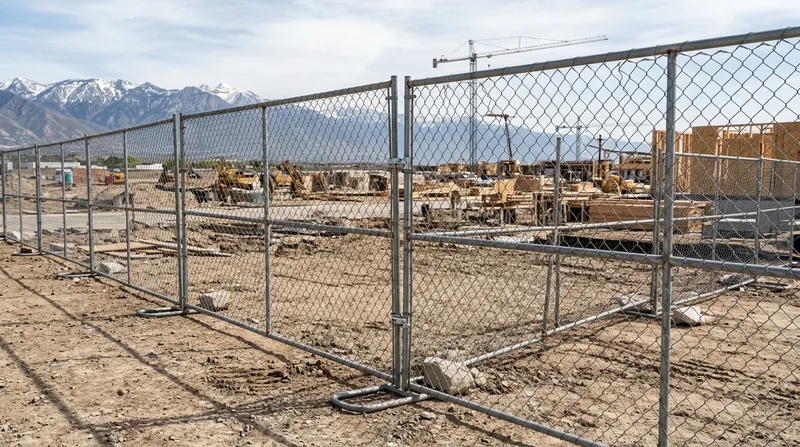




Construction and temporary site fencing in Salt Lake City keeps pace with the valley's steady growth. Whether you're securing a job site on the valley floor, protecting a residential construction zone in the foothills, or managing a temporary boundary during renovation, commercial fence installation in Salt Lake City requires the right materials, proper setup, and clear understanding of local codes. We supply and install temporary panel fencing, chain link barriers, and silt fence systems that hold up to site traffic and weather exposure. From West Valley City to Sandy and across the metro, we work with general contractors, property managers, and homeowners who need a fence up fast and taken down clean when the job is done.
Why Temporary and Commercial Fencing Matters on Salt Lake City Job Sites
A job site without proper perimeter control invites liability, theft, and safety violations. Temporary fencing creates a clear boundary, controls foot traffic, and signals to the public that the area is restricted. Commercial chain link fence is the industry standard because it's fast to install, visible, durable, and easy to move when the project phase changes. Silt fence protects drainage in sensitive areas and meets local erosion control rules. Panel fencing offers privacy and wind resistance on exposed sites. Getting the fence up on schedule and to code is the difference between a smooth project and costly delays.
- Temporary fencing secures the site perimeter and prevents unauthorized access or material loss.
- Chain link and panel systems install quickly and adapt to changing site conditions.
- Silt fence controls sediment runoff and meets local stormwater management requirements.
- Proper height and material choices comply with Salt Lake City building department standards.
- Removal and site cleanup are built into the contract, leaving no trace when the job ends.
Choosing the right fencing system and contractor keeps your project on schedule and protects your site from day one.
Key info: Salt Lake City and most surrounding jurisdictions require temporary site fencing to meet height, setback, and material standards before a building permit is issued. Confirm requirements with your city or county building department and verify that your contractor understands local code for your specific location.
How We Install Commercial and Temporary Fencing in Salt Lake City
Our process starts with your site layout and project timeline. We assess access, ground conditions, utility locations, and any local permit requirements before ordering materials. Utah law requires a utility locate (811 call) before any post holes are dug, and we handle that step to keep your crew safe and avoid service interruptions. We set posts at correct spacing, ensure panels or mesh are plumb and secure, and verify that all hardware is tight. When the project is complete, we remove the system and clear the site unless you need the fence to stay longer.
- We schedule a site visit to measure, identify utilities, and confirm local code requirements.
- Utah 811 utility locates are performed before any digging begins.
- Posts are set in concrete at the depth and spacing specified for your fence type and load.
- Chain link or panels are stretched tight, secured with tension bands or fasteners, and checked for plumb.
- Gates and access points are hung level and tested for smooth operation.
- On project close, we remove all materials and restore the site to clean condition.
From permit verification to final cleanup, we manage the details so your site stays secure and code-compliant throughout the job.
Real example: A West Jordan residential construction project required temporary chain link fencing with a 6-foot height and silt fence along the downslope boundary. We pulled the utility locate, set posts 6 feet apart in concrete, installed 2-inch mesh chain link with tension bands, and added silt fence to the erosion zone. The site stayed secure for 18 months, and we removed everything on final walkthrough.
Commercial and Temporary Fencing Systems: Approach and Best Use
| Approach | Description | Best for |
|---|---|---|
| Chain Link Fence | 2-inch or 6-gauge galvanized mesh, posts set 6 feet apart in concrete, tension bands and stretcher bar for tightness. | General site perimeter, high-traffic areas, temporary or long-term use, good visibility. |
| Temporary Panel Fencing | Modular panels, typically 6 or 8 feet tall, set in weighted feet or bolted to posts, easy to move and reconfigure. | Short-term projects, privacy screening, wind protection, sites where posts cannot be dug. |
| Silt Fence Installation | Geotextile fabric on wooden posts, installed along downslope or drainage boundaries to trap sediment. | Erosion control, stormwater compliance, sites with slope or exposed soil adjacent to sensitive areas. |
| Construction Site Gates | Single or double swing gates, self-closing hinges, latch hardware, set on posts or frames for easy access and closure. | Vehicle and pedestrian entry points, controlled access, sites requiring secure closure between work hours. |
Commercial and Temporary Fencing Cost in Salt Lake City: What to Expect
Temporary and commercial fencing costs depend on the fence type, linear footage, post spacing, ground conditions, and how long the fence will stand. Chain link fencing typically costs less per linear foot than panel systems, but panel fencing may be faster to install if digging is restricted. Silt fence is an add-on cost tied to the length of the erosion boundary. Site access, utility locate requirements, and whether posts can be set in concrete all affect the final price. We provide a free site quote to assess your layout and give you a realistic estimate before you commit.
Factors that influence cost include fence height (4, 6, or 8 feet), mesh gauge for chain link (2-inch or 6-gauge), whether posts are set in concrete or tamped, gate size and hardware, removal and site cleanup, and the distance from our shop. Temporary fencing is often charged by the linear foot for installation and removal, with a separate fee for the rental period if the fence stays beyond the initial job. Getting 2 to 3 quotes from local contractors helps you compare approach, timeline, and price. See our full pricing overview for typical ranges and call (385) 354-7337 for a free estimate tailored to your site.
Hiring a Commercial Fencing Contractor Near Me: What Salt Lake City Property Managers Should Know
When you hire a contractor for temporary or commercial fencing, verify that they carry full liability and workers' compensation insurance and can provide a certificate on request. In Utah, fence work is regulated by the Division of Professional Licensing, which issues contractor classifications for fencing and related trades. Before you hire, ask any contractor to verify their licensing status directly with the Utah Division of Professional Licensing and confirm that they understand the specific permit and code requirements for your project location. Permit rules vary across Salt Lake City, West Valley City, Sandy, and other jurisdictions in the metro, so always verify with your city or county building department.
- Confirm that the contractor carries liability insurance and workers' compensation coverage.
- Ask the contractor to verify their licensing status with the Utah Division of Professional Licensing.
- Request references from recent commercial or temporary fencing projects in your area.
- Verify permit requirements with your city or county building department before the project starts.
- Check that the contractor understands local setback, height, and material rules for your site.
- Get the estimate in writing, including material costs, labor, utilities locate, and removal.
A contractor who takes time to understand your site, confirms local code, and communicates clearly about timeline and cost is the one who will keep your project on track. Contact us for a free estimate and to discuss your temporary fencing needs.
Commercial & Temporary Fencing in Salt Lake City: Pricing Guide
| Service | Price | Details |
|---|---|---|
| Free site quote | Free | Site visit, measurement, utility locate coordination, and estimate based on fence type and linear footage |
| Chain link fencing installation | Starting at $18/linear foot | 2-inch galvanized mesh, posts set 6 feet apart in concrete, tension bands, labor and materials included |
| Temporary panel fencing | Starting at $22/linear foot | Modular panels 6 or 8 feet tall, installation and removal, weighted feet or post mounting based on site conditions |
| Silt fence installation | Starting at $8/linear foot | Geotextile fabric on wooden posts, installed along drainage boundary, erosion control and stormwater compliance |
| Gate installation | Starting at $350 | Single swing gate with hinges, latch hardware, and frame, labor and materials, additional gates priced per unit |
| Removal and site cleanup | Starting at $12/linear foot | Complete removal of fence, posts, and debris, site restoration, included in temporary fence contracts or quoted separately |
Indicative pricing, the exact cost depends on square footage, finish, and site access. Free personalized estimate within 24h at (385) 354-7337.


